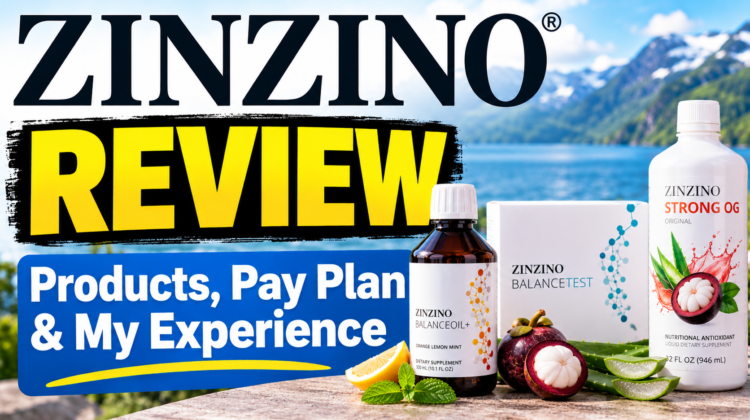
If you’re looking for an honest Zinzino review, here’s my perspective: Zinzino is an established, publicly traded wellness company with an interesting test-based nutrition concept. But after more than 24 years in network marketing, I have serious reservations about how complicated its compensation plan is and how difficult building meaningful residual income can become.
I’m not writing this as somebody who has never joined the company. I joined Zinzino, I’ve purchased its products, and I’m still using Strong OG. But I never actively built a Zinzino distributor organization, and I’m not going to pretend otherwise.
I also have a personal connection to part of Zinzino’s product history that goes back many years. That story is one reason I became interested in the company in the first place.
I’ll cover the company, its products, the BalanceTest concept, the compensation plan, and what I’d think about before trying to build a serious business here.
What Is Zinzino?
Zinzino is a Scandinavian direct-selling company focused on nutritional supplements and at-home wellness testing. Its roots go back to 2005, and the business has expanded internationally over the years.
Unlike a small startup with little operating history, Zinzino is a publicly traded company. It publishes financial reports, reports substantial sales, and has expanded through acquisitions. Its shares trade on Nasdaq First North Premier Growth Market in Sweden.
That matters to me. A public listing doesn’t guarantee that a distributor will make money, or even that the company will be a good fit. But it does give prospective partners more company information to evaluate than they might find with a privately held opportunity.
Zinzino’s central marketing concept is test-based nutrition: rather than simply taking supplements and hoping for the best, customers can use at-home tests to measure certain nutritional markers and see whether those markers change over time.
On paper, that’s a compelling concept. In practice, I think it comes with both an advantage and a potential obstacle. I’ll explain both.
My Personal Experience With Zinzino, Vemma, and Strong OG
One reason Zinzino caught my attention has to do with its acquisition of Bodē Pro.
I spent approximately nine years building Vemma, the network marketing company that preceded Bodē Pro in this product’s history. Vemma was a major chapter in my network marketing career, and it ended painfully when the Federal Trade Commission took action against the company in 2015.
The FTC alleged that Vemma’s business practices constituted a pyramid scheme. The company later settled with the FTC under a court order restricting those practices. I’m not going to turn this article into a review of the Vemma case, but it’s an important part of my own history in this industry.
Years later, Bodē Pro carried forward products associated with that earlier business. In September 2025, Zinzino announced that it had acquired Bodē Pro’s distributor and customer records, inventory, and intellectual-property rights.
That’s how a product I was already familiar with became part of the Zinzino story.
I joined Zinzino, but I never seriously tried to build the business. I did continue purchasing and using Strong OG, a product I already knew from that earlier history.
I don’t want to confuse those two things. My experience with Strong OG is a personal product experience, not evidence that Zinzino’s income opportunity works well for the average distributor.
I’ve also found the cost of ordering products as a partner frustrating. In my own experience, the total price of one BalanceOil order was around $95 after shipping and tax, and the costs associated with my partner account made ordering Strong OG less attractive than I expected.
That’s why I canceled my Strong OG partner order and plan to purchase it as a customer instead, if the customer pricing continues to work out better for me. Those are my actual order experiences, not a claim that every customer or partner pays the same amount.
What Products Does Zinzino Sell?
Zinzino’s best-known product category centers on omega-3 fatty acids, particularly its BalanceOil line. It also offers other nutritional products and home testing options, including tests related to fatty-acid status and other wellness markers.
The company’s broader product portfolio has expanded through acquisitions, including Bodē Pro. If you’re evaluating a specific supplement, I would look at its ingredients, serving size, actual delivered cost, and how it compares with similar products you could buy elsewhere.
I’ve been involved in network marketing long enough to know that a good story about a product doesn’t automatically make it a good value.
Sometimes a product really is distinctive. Sometimes the main difference is the marketing surrounding it.
For me, the deciding question is simple: Would I buy this product at this price even if there were no compensation plan?
That question matters for customers. And I think it matters even more for someone considering building a business around the product.
Is Zinzino’s BalanceOil Worth the Price?
BalanceOil is central to Zinzino’s test-based nutrition approach. Its formulations combine omega-3 fatty acids with other ingredients, and the company encourages customers to evaluate their fatty-acid profiles through its testing program.
Whether it’s worth the price depends on what you’re comparing, the size and formulation you order, your subscription terms, and what you personally value about the testing concept.
In my case, the total cost of a single bottle was roughly $95 after tax and shipping. That’s a meaningful amount of money for an omega-3 supplement, and it made me pay close attention to the value proposition.
I’m not saying a more expensive supplement is automatically a bad supplement. I’m saying the higher the price, the stronger the reason I need to justify purchasing it repeatedly.
And if I’m going to recommend that product to other people every month, I want to be comfortable explaining why it’s worth the money without leaning on the income opportunity.
How Does Zinzino’s BalanceTest Work?
This is one of the more interesting aspects of Zinzino’s business model.
Its BalanceTest uses a small blood sample collected at home through a finger prick. The dried blood sample is analyzed to provide information about fatty acids, including omega-3 levels and the balance of certain fatty acids in the blood.
Customers can take an initial test, follow a nutrition routine, and take another test after approximately four months to see whether the measured markers have changed.
I can understand why people find this appealing. Most supplement companies ask you to buy a product and trust that it’s doing something useful. Zinzino offers a way to track specific measurements before and after.
That’s a genuine point of differentiation.
But it’s important to be precise about what a test establishes. A change in a fatty-acid measurement is not the same as proof that a supplement has treated a disease or improved every aspect of someone’s health. The test provides nutritional information, not a medical diagnosis.
My Concern: Will People Actually Want to Prick Their Finger?
Here’s where my marketing instincts kick in.
Getting someone to try a nutritional product is one thing. Getting them to stick their finger with a lancet and collect a blood sample is another.
Some customers won’t think twice about it. Others dislike needles, feel uncomfortable handling blood, or simply don’t want an extra step before using a supplement.
I can see the test being a powerful selling point for the right person. I can also see it becoming a roadblock for someone who would otherwise have been happy to try an omega-3 product.
And then there’s the follow-up test. The business model becomes more compelling when customers actually complete the process and understand the results. But that requires participation, not just a product purchase.
My opinion is that the testing concept is both one of Zinzino’s strongest differentiators and a potential source of friction in customer acquisition. I haven’t measured Zinzino’s customer conversion rates, so that’s a marketing judgment, not a claim about the company’s actual results.
And when you’re building a customer-based business, anything that makes the first sale or repeat purchase harder deserves consideration.
There’s a bigger question behind all of this: how many paying customers can you realistically attract and keep, and what does that customer base actually produce in residual income? Those are the numbers I’d want to understand before committing years to any opportunity.

How Does the Zinzino Compensation Plan Work?
This is the part of Zinzino that gave me the most pause.
I’ve evaluated and built network marketing compensation plans for more than two decades. I’ve worked with binary structures, matrix programs, and other systems. So I’m not unfamiliar with the terminology or the basic math.
Even with that background, Zinzino has one of the more complicated compensation plans I’ve personally encountered.
Its plan includes customer-related rewards, team-volume commissions, rank qualifications, bonuses, and additional incentives. At its core is a two-team structure, often described as a binary, but understanding the binary alone doesn’t tell you everything you need to know about getting paid.
That’s why I don’t think it would be helpful to turn this review into a detailed breakdown of every bonus, credit, and qualification. If you’re considering becoming a partner, you should read the current official plan for your country, because qualifications and terms can change.
What matters more to me is whether a typical person can understand the business well enough to build it consistently.
The Binary Is Only Part of the Story
In a binary-style structure, sales activity is tracked through two teams or legs. Qualifying volume and balance between those teams affect the team commissions a partner can earn.
That means having a lot of customers or distributors somewhere in your organization doesn’t automatically mean all that volume will generate commissions for you. Placement, balance, eligibility, and the specific rules of the plan matter.
Zinzino also uses its own credits and Pay Points in compensation calculations. Those figures shouldn’t be confused with the retail price customers pay for products.
For this review, I’m deliberately not using a single hypothetical bottle order to estimate what an entire organization would earn. That would leave out too many other bonuses and qualifications and could give readers the wrong impression.
The important takeaway is that team size, product sales, and your actual paycheck are three different numbers.
The Qualification Problem
Here’s my bigger objection, and it applies to plenty of network marketing companies besides Zinzino.
Every plan needs rules. I understand that. A company has to define active status, customer requirements, ranks, and how commissions are calculated.
But the more qualifications you add, the easier it becomes for a distributor to spend time managing the compensation plan instead of doing the work that actually grows the business.
You can end up worrying about how many customers you need, whether you have the correct volume in both legs, which rank you’ve qualified for, which bonus you unlocked, and whether a particular order counts the way you expected.
Some people enjoy mastering that kind of system.
Personally, I don’t.
I want to spend my time generating leads, finding customers, helping people, and building a team—not studying a compensation plan every time I want to know whether I’ll get paid.
That’s not an accusation that Zinzino withholds earned commissions. It’s my opinion about the complexity of the system and the amount of attention that complexity can demand.
Does Zinzino Pay Enough to Make Building a Large Team Worthwhile?
This is the question I think more prospective distributors should ask before joining any network marketing company.
Not just Zinzino.
Any company.
Imagine spending years building a customer and distributor organization of several hundred people. That sounds impressive. And in terms of the work involved, it probably is.
But what if the commissions don’t add up to the income you expected?
What if you need substantially more volume to reach the next meaningful income level? What if customer attrition, rank requirements, or the balance of your organization changes the amount you’re paid?
These aren’t predictions about Zinzino earnings. They’re questions I would ask about the economics of any recurring-income business.
I’ve watched people become fascinated with company growth, rank titles, and the number of people in their downline while paying too little attention to the amount of actual income being generated.
And I’ve learned that a large organization isn’t necessarily a profitable one.
In fact, one of the most useful lessons I’ve taken from more than 24 years in this industry is that the size of the organization and the economics of the compensation plan have to be evaluated together.
Otherwise, you may spend years getting very good at building something that pays far less than you expected.
That’s why I like looking at the numbers before getting emotionally attached to a company or compensation plan. There’s a free guide that walks through how two very different business structures can produce very different income outcomes, even when the larger team looks more impressive on paper.
What I Like About Zinzino
I don’t want my criticism of the compensation plan to overshadow the things Zinzino has going for it.
First, it’s an established company with publicly available financial information. That’s a positive when you’re evaluating the stability and direction of a business.
Second, the test-based nutrition concept gives distributors a distinctive story to tell. For customers who are interested in measuring their fatty-acid status, that’s more specific than simply being told to take a supplement and hope it works.
Third, Zinzino has expanded its product portfolio and distribution reach through acquisitions. The Bodē Pro acquisition is particularly meaningful to me because of my personal history with the product line.
And finally, I’m still using Strong OG. That doesn’t mean I endorse every product Zinzino sells, but it does mean I have a genuine reason to remain interested in at least part of its product lineup.
What I Don’t Like About Zinzino
My biggest concern is the compensation-plan complexity. I think a business becomes harder to duplicate when new distributors have to learn too many rules before they can confidently explain how they get paid.
I’m also sensitive to product costs. I personally paid around $95 for a BalanceOil order after tax and shipping, and my experience with partner-related ordering costs influenced my decision to change how I purchase Strong OG.
Finally, I have mixed feelings about the testing process. I like the idea of measuring results. I just don’t assume every prospective customer will be enthusiastic about collecting blood samples at home.
Those concerns don’t mean Zinzino is a bad company. They mean it wouldn’t automatically be my first choice simply because it has a differentiated product concept and a long list of bonuses.
Is Zinzino Legit?
Zinzino is a real, established direct-selling company with publicly reported financial results, a product portfolio, and a documented business model. It’s not an anonymous website promising money for doing nothing.
But “Is Zinzino legit?” and “Is Zinzino the right business for me?” are two different questions.
A legitimate company can still have products you consider too expensive, a compensation plan you find too complicated, or customer-acquisition requirements that don’t suit your strengths.
And being a legitimate business does not mean the average partner earns a substantial income.
Before joining to build a business, I’d want to review the current income disclosure, official compensation rules, customer pricing, and my likely ongoing costs. I’d also want to know how much customer volume is needed just to cover those costs.
Would I Build Zinzino Today?
I already joined the company, but I never seriously built it.
That’s an important distinction because I don’t want to write as if I’ve personally tested Zinzino’s recruiting system, built a large Zinzino team, or earned significant Zinzino commissions. I haven’t.
My assessment comes from my experience with the products, my history in the industry, and my evaluation of the business model.
If I were considering building Zinzino seriously, I’d start with a few practical questions.
- Can I attract customers who genuinely want the products at the actual delivered price?
- Will enough of those customers remain on recurring orders because they value what they’re buying?
- Can I explain the testing process without making exaggerated health claims?
- Can I understand and maintain the qualifications necessary to earn the commissions I’m expecting?
- How much real customer volume would I need to create the monthly residual income I want?
I’d also want to know whether I could teach someone else to do the same things without turning the business into a complicated training course on the compensation plan.
Because the real work is still the real work: finding prospects, following up, making sales, serving customers, and helping other people become productive.
No clever bonus structure eliminates that.
My Bottom Line on Zinzino
I see legitimate strengths in Zinzino. The company has history, a public reporting record, a differentiated testing concept, and products that appeal to some customers.
I’m still using Strong OG myself, which gives me a personal connection to the product side of the business.
But if you’re thinking about joining Zinzino primarily to build a significant residual income, I’d encourage you to look beyond the product story and the number of ways the compensation plan says you can get paid.
Understand the qualifications. Understand the customer economics. And understand what it would realistically take to build and maintain the volume necessary to reach your income goal.
Building a team of hundreds—or even thousands—of customers and distributors can require years of consistent effort. And there’s no guarantee that a large team will translate into the kind of income you want.
That’s not unique to Zinzino. It’s a reality worth understanding throughout network marketing.
Before You Join Zinzino—or Any Network Marketing Company—Look at the Math
Here’s something that changed the way I think about residual income.
A marketer I learned about had built an organization of approximately 600 people and was earning around $1,200 per month. Later, using a different business model, he described earning approximately $7,200 per month with a team of about 60 people.
Those are his reported experiences, not Zinzino income figures, and they’re not typical-income projections or a promise that someone else will get the same result.
What interested me wasn’t the income claim by itself. It was the underlying question:
How can two businesses with dramatically different team sizes produce such different income?
The answer has to do with how revenue is generated, how commissions are structured, how customers are retained, and what has to happen before someone gets paid.
That’s why I think it’s worth studying the economics of a business before spending the next several years building it.
I still believe in network marketing and the potential of recurring income. But I also believe that the math matters at least as much as the excitement surrounding a company.
If you’re evaluating Zinzino—or any other opportunity—and want to understand why team size alone can be such a misleading measure of success, I recommend starting with a free guide that walks through the numbers and the different ways recurring-income models can work.
Disclosure: I joined Zinzino and have purchased its products. This review reflects my own experience and opinions. Some links or banners on this site may be affiliate links, meaning I may receive compensation if you take action through them, at no additional cost to you. No earnings are guaranteed, and individual results vary.
Leave a Reply